
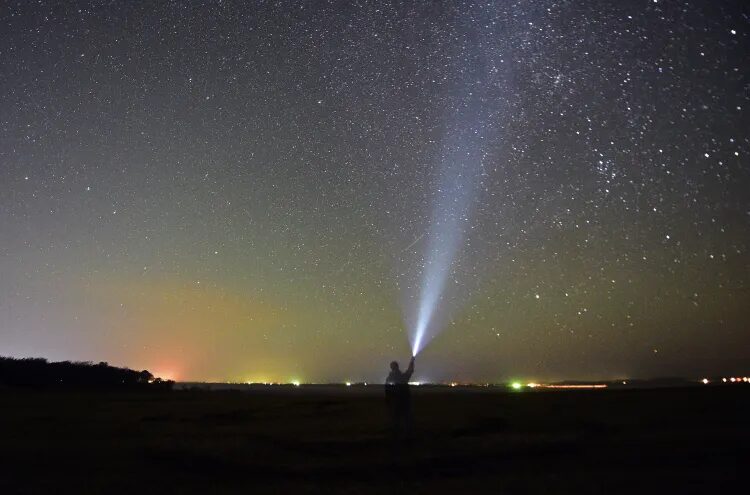
An awe-inspiring celestial show is headed to Earth, and you can still secure a front-row seat to one of nature’s most spectacular displays. The Orionid meteor shower happens once a year when Earth travels through debris left behind by the legendary Halley’s Comet during its famous 1986 passage through our solar system. According to NASA, Orionid’s shooting stars are particularly bright and fast, with glowing trails that can last from several seconds to minutes—and they’re “considered to be one of the most beautiful showers of the year.” This year’s event promises exceptional viewing conditions thanks to favorable moon phases that will create darker skies and more visible meteors.
The enchanting spectacle peaks in late October, and thanks to the moon’s 2025 phases, this year’s climax is expected to be one of the most luminous on record. Orionid meteors will have the spotlight to themselves as the moon darkens from Earth while entering a new moon phase on Oct. 21, creating ideal dark sky conditions for meteor observation.
Understanding the Orionid Meteor Shower
The autumnal shower gets its name from the constellation Orion, the mythological hunter prominently visible in the night sky. Meteors will appear to radiate from the shower’s point of origin, or radiant, near Orion’s position in the sky. Viewers should look toward the southeastern horizon in the Northern Hemisphere and the northwest horizon in the Southern Hemisphere.
To see the longest glowing debris trails, set your gaze 40 degrees above the radiant after allowing your eyes to adjust to the dark for 30 minutes. This adjustment period is crucial for optimal viewing—your eyes need time to adapt to darkness before you can fully appreciate the fainter meteors streaming across the sky.
Best Viewing Locations by Hemisphere
Since the radiant is near the celestial equator, it will be visible almost globally—but those in the Northern Hemisphere will likely experience the most spectacular displays. The hemisphere’s crisp fall air means more visibility than in other parts of the world and better conditions than those during summer events like the Perseid meteor shower.
Northerners will also enjoy longer viewing windows since the radiant’s appearance will be higher in the sky and therefore longer lasting. The combination of clear weather, reduced atmospheric interference, and optimal positioning makes this one of the year’s premier astronomical events for North American sky watchers.
Peak Viewing Dates and Times
You’ll have multiple chances to catch the fireballs: Halley’s luminescent remains are active from Oct. 2 to Nov. 12. However, the peak is predicted to occur between Oct. 20 and Oct. 21, when up to 20 to 30 shooting stars per hour will be visible in ideal dark sky conditions.
Optimal viewing in both the Northern and Southern Hemispheres will be from midnight until dawn. This timeframe coincides with when the constellation Orion rises highest in the sky and when your location on Earth is positioned to sweep through the densest concentration of comet debris.
Best Viewing Locations in the United States
Although the showers will be visible from almost everywhere, heading to a dark sky area provides the best conditions for experiencing this celestial phenomenon. The U.S. will offer some of the most dazzling views in the world, with western national parks providing exceptional vantage points.
Western United States
Joshua Tree National Park in California, North Cascades National Park in Washington, and Crater Lake National Park in Oregon rank among the best locations for meteor visibility. The dry, clear weather and some of the world’s darkest skies in the Southwest also create incredible viewing conditions. The region’s high elevation, low humidity, and minimal light pollution combine to create near-perfect circumstances for stargazing.
Eastern United States
The Southeast will still get a show, but clouds and humidity may reduce intensity compared to western locations. The best locations for visibility on the East Coast include Cherry Springs State Park in Pennsylvania, the Adirondack Mountains in upstate New York, and Maine’s Acadia National Park.
These locations have earned reputations as premier stargazing destinations due to their protected dark sky status and minimal interference from urban areas. Cherry Springs, in particular, has been designated an International Dark Sky Park, offering some of the darkest skies on the East Coast.
Midwestern United States
Midwesterners should venture to parks away from city lights, especially international dark sky areas like Illinois’ Middle Fork River Forest Preserve, Michigan’s Headlands International Dark Sky Park, and Wisconsin’s Newport State Park.
These designated dark sky preserves have implemented strict light pollution controls, making them ideal destinations for meteor shower viewing and general astronomical observation. The relatively flat terrain of the Midwest also provides unobstructed horizon views, allowing viewers to see meteors across a wider expanse of sky.
Bonus Celestial Event: Comet C/2025 A6 (Lemmon)
While Orionid activity is peaking in late October, viewers may catch a bonus sighting: Comet C/2025 A6 (Lemmon). This green comet from outside our galaxy was discovered in January 2025 and represents a rare opportunity for amateur astronomers and casual observers alike.
Comet Lemmon is predicted to be closest to Earth between Oct. 20 and Oct. 21—coinciding perfectly with the Orionid meteor shower peak. Once again, the Northern Hemisphere will have the best vantage points for observing this extraordinary visitor from deep space.
You’ll want to seize this opportunity for a cosmic double feature since experts predict Comet Lemmon won’t be visible from Earth again until the year 3421. If you hope to spot Lemmon from the Northern Hemisphere, look toward the northwestern sky during the pre-dawn hours when the sky is darkest.
Tips for Optimal Meteor Shower Viewing
To maximize your Orionid meteor shower experience, follow these expert recommendations:
Location Selection
Choose a location far from city lights and light pollution. Dark sky parks, national parks, and rural areas provide the best viewing conditions. Check local dark sky maps to identify the darkest areas accessible from your location.
Timing Your Visit
Arrive at your viewing location at least 30 minutes before you plan to start watching. This allows your eyes to fully adjust to the darkness, dramatically improving your ability to spot fainter meteors. The hours between midnight and dawn consistently offer the best viewing as the radiant rises higher in the sky.
Equipment and Preparation
You don’t need telescopes or binoculars—in fact, these instruments limit your field of view and can cause you to miss meteors. Your naked eye is the best tool for meteor shower observation. However, do bring:
- A comfortable reclining chair or blanket
- Warm clothing layers (October nights can be chilly)
- Red flashlight to preserve night vision
- Hot beverages in a thermos
- Stargazing apps to help identify constellations
Weather Considerations
Check weather forecasts several days in advance and be prepared with backup dates if clouds threaten your viewing plans. Clear skies are essential for meteor viewing, so flexibility in scheduling can make the difference between disappointment and an unforgettable experience.
The Science Behind Halley’s Comet Debris
Halley’s Comet is perhaps the most famous comet in human history, with recorded observations dating back over 2,000 years. The comet orbits the sun approximately every 75-76 years, most recently appearing in 1986 and expected to return in 2061.
As the comet approaches the sun during its orbit, solar radiation causes its icy surface to vaporize, releasing dust and rocky debris. This material spreads out along the comet’s orbital path, creating a debris stream that Earth passes through twice each year—once in May (producing the Eta Aquarid meteor shower) and again in October (creating the Orionid meteor shower).
The meteors we see are actually tiny particles, typically no larger than a grain of sand, entering Earth’s atmosphere at speeds approaching 148,000 miles per hour. The friction generated by this high-speed entry causes the particles to heat up and glow, creating the bright streaks we call shooting stars.
Photography Tips for Meteor Showers
For photography enthusiasts hoping to capture the Orionid meteor shower, consider these techniques:
Use a camera with manual settings and a wide-angle lens. Set your ISO to 1600-3200, aperture to f/2.8 or wider if possible, and shutter speed to 15-30 seconds. Frame your composition to include interesting foreground elements like trees or rock formations, with plenty of sky visible.
Take continuous exposures throughout the night—the more shots you take, the better your chances of capturing a bright meteor. Consider using interval shooting modes if your camera supports them. Meteor photography requires patience, but the results can be spectacular.
Historical Significance of the Orionids
The Orionid meteor shower has been observed for centuries, though its connection to Halley’s Comet wasn’t understood until relatively recently. Ancient civilizations around the world recorded seeing shooting stars during October, often interpreting them through cultural and religious lenses.
Modern understanding of the shower’s origins came in the 19th century when astronomers began connecting meteor showers with cometary debris streams. The Orionids provided crucial evidence for this theory, helping establish our current understanding of how the solar system works.
Planning Your Meteor Shower Experience
Whether you’re an experienced astronomer or simply someone who appreciates natural beauty, the 2025 Orionid meteor shower offers an accessible and memorable experience. The combination of peak viewing conditions, the new moon phase, and the bonus appearance of Comet Lemmon creates a once-in-a-lifetime opportunity.
Consider making this a social event—invite friends or family to join you for a stargazing adventure. Many astronomy clubs and observatories host public viewing events during major meteor showers, providing expert commentary and educational opportunities alongside the visual spectacle.
The Orionid meteor shower reminds us of our connection to the broader cosmos and the dynamic nature of our solar system. As you watch debris from Halley’s Comet burn up in our atmosphere, you’re witnessing material that has been orbiting the sun for thousands of years, creating a tangible link to astronomical history.
Find more celestial event guides, astronomy tips, and natural phenomena coverage at The Inspiring Insight—where we explore the wonders of our universe and help you experience the most spectacular shows nature has to offer.