
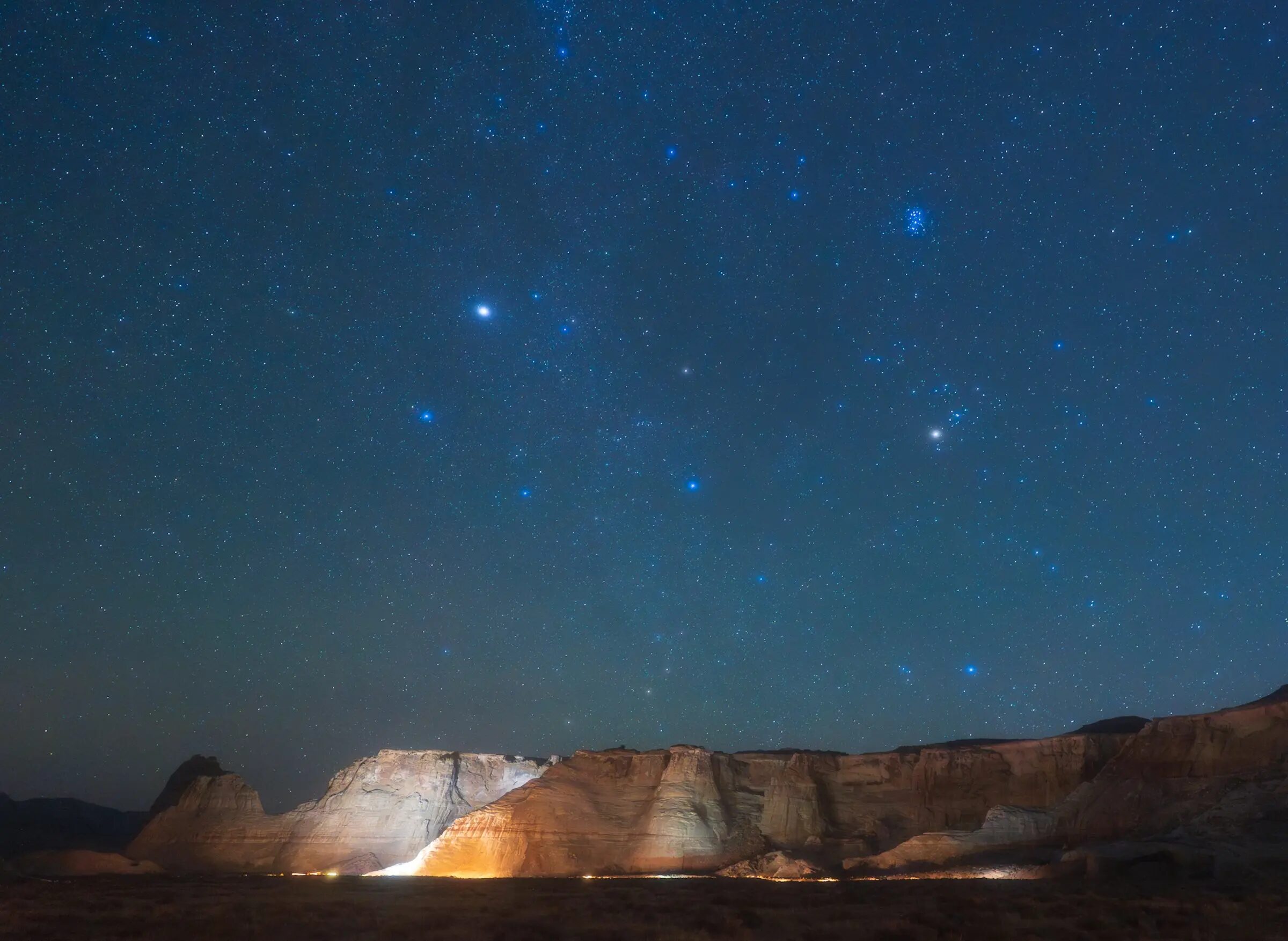
The February 2026 planet parade peaks on February 28 with six planets simultaneously visible in the evening sky—Venus, Mercury, Saturn, and Neptune hugging the western horizon after sunset, while Uranus appears high in the southern sky near the Pleiades star cluster and brilliant Jupiter glimmers in the eastern sky, creating one of the year’s most accessible astronomical events viewable from backyards despite city light pollution though requiring strategic viewpoints for horizon-hugging planets. This six-planet alignment represents one of the most spectacular planetary configurations of 2026, with four planets visible to the naked eye (Venus, Jupiter, Saturn, Mercury) while the outermost planets Neptune and Uranus require strong binoculars or telescopes for observation during the 30-to-60-minute viewing window beginning immediately after sunset before Venus and Mercury set below the western horizon. The planet parade February 28, 2026 occurs along the ecliptic—the rough arc-like orbital path planets follow from their formation billions of years ago in the debris disk surrounding our sun—creating the astronomical alignment enabling multiple planets to appear simultaneously in Earth’s night sky.
The NASA planet parade information confirms February 28 as the optimal viewing date when horizon-hugging planets like Venus remain visible longest, though the planetary arrangement remains observable for several weeks with particularly noteworthy nights featuring moon-planet interactions.
Understanding What Makes a Planet Parade Special
A planet parade astronomical phenomenon occurs when several neighboring solar system bodies appear simultaneously in Earth’s night sky, creating visual spectacles where casual observers can appreciate planetary positions without specialized knowledge or equipment. The February 2026 six-planet alignment includes both inner planets (Venus, Mercury) and outer planets (Saturn, Uranus, Neptune, Jupiter) distributed across the evening sky from western to eastern horizons.
The ecliptic path planets follow results from our solar system’s formation process billions of years ago when gas and debris gathered in a ring around the sun. The planets formed along this debris disk solar system formation, and they continue following roughly the same orbital plane today, creating the arc-like path known as the ecliptic orbital plane. When Earth’s position relative to other planets aligns favorably, multiple worlds appear simultaneously along this celestial highway—the phenomenon creating planet parades.
Understanding this formation history transforms casual viewing into deeper appreciation of cosmic mechanics governing planetary motion. The billions of years planetary formation process that created the visible alignment continues operating through gravitational physics unchanged since our solar system’s origin.
Planet Positions and Visibility Requirements
The western horizon planets February 2026 include Venus, Mercury, Saturn, and Neptune appearing above the sunset point once darkness falls. These worlds require clear western horizon views for observation, as they hover relatively low and set within 30-60 minutes after the sun disappears completely.
Jupiter eastern sky provides the brightest planetary presence in the February parade, with the gas giant’s magnitude making it unmistakable to even casual observers. Jupiter’s position high in the eastern sky at sunset makes it the easiest parade participant to locate and identify.
Uranus southern sky appears near the Pleiades star cluster, providing a convenient reference point for locating the distant ice giant. While technically visible to exceptionally dark-adapted eyes under perfect conditions, most observers require optical aids for Uranus viewing.
The naked eye planets Venus Jupiter Saturn Mercury provide the spectacular visual core of the parade, with these four worlds appearing bright enough for observation from urban and suburban locations despite significant light pollution. Neptune telescope required and Uranus binoculars required separate these distant worlds from their more accessible siblings, requiring at minimum strong binoculars and preferably small telescopes for satisfactory views.
Wildlife binoculars Jupiter moons capability demonstrates how even modest optical equipment enhances planetary viewing. The Nikon Monarch M7 8×42 referenced represents quality entry-level binoculars sufficient for revealing Jupiter’s four Galilean moons—the same satellites Galileo observed in 1610, fundamentally transforming human understanding of celestial mechanics.
Optimal Viewing Dates and Moon Interactions
While February 28 best planet parade date according to NASA provides peak viewing when Venus remains visible longest, the several weeks planet visibility surrounding this date offers multiple observation opportunities. The noteworthy moon interaction dates throughout late February add special interest:
February 18 moon Mercury conjunction features the barely-visible crescent moon appearing as a sliver beside Mercury—a challenging observation requiring excellent western horizon views and perfectly clear skies immediately after sunset.
February 19 moon Saturn positioning places the crescent moon just above Saturn, creating photogenic pairing visible with modest equipment and reasonably clear horizons.
February 23 moon Pleiades Uranus configuration positions the moon near the famous star cluster with Uranus in the same field of view—ideal for binocular observers seeking to identify the otherwise elusive ice giant.
February 26-27 moon Jupiter presents the waxing gibbous moon gliding past brilliant Jupiter over consecutive nights, creating the parade’s most obvious and spectacular moon-planet interaction visible worldwide regardless of local horizon obstructions.
The action begins after sundown timing makes this early-to-bed planet parade particularly accessible for families with children and observers who prefer evening rather than late-night or pre-dawn viewing sessions. The 30-60 minutes visibility window before Venus and Mercury set requires prompt setup after sunset rather than the leisurely preparations possible for longer-duration astronomical events.
The critical wait until sun fully set safety reminder prevents eye damage from accidentally viewing the sun through binoculars or telescopes—a serious risk when pointing optical aids toward western horizons immediately after sunset.
Strategic Viewing Locations Across America
Location importance planet parade cannot be overstated for February’s event. Unlike deep-sky objects requiring dark skies, planets shine brightly enough for urban observation, but the clear western horizon views requirement for seeing Venus, Mercury, Saturn, and Neptune necessitates careful site selection.
The lakes mountaintops observation towers recommendation targets elevated or unobstructed locations providing clear sightlines to western horizons. The sunset viewpoint planet parade strategy suggests using locations known for spectacular sunsets, as these sites by definition offer clear western views.
Northeast Region Viewing Sites
Verona Beach State Park New York provides exceptional western views across massive Oneida Lake, with 13 miles of hiking trails for pre-sunset exploration. Located ten miles from Syracuse, the park offers $7 vehicle entrance fee access from dawn until dusk, positioning observers perfectly for the western horizon planets.
Cape Cod National Seashore Massachusetts features snow-dusted dunes and unobstructed western horizon views during February’s typically frigid but crowd-free conditions. The Herring Cove Beach, Race Point Lighthouse, and Wood End Lighthouse locations provide varied viewpoints along the coast with $15 entrance fee starting price.
Midwest Viewing Locations
Wind Cave National Park South Dakota features the Boland Ridge climb to the park’s highest point via gravel road, creating perfect sunset and planet horizon viewing. The 5.2-mile round-trip trail requires cold weather preparation and vigilance for bison and elk wildlife, with free park entrance making it economically accessible.
Sleeping Bear Dunes National Lakeshore Michigan offers soaring sand dunes and western views across Lake Michigan from multiple vantage points. The Sleeping Bear Dune Overlook on Pierce Stocking Scenic Drive and the challenging 3.5-mile Dunes Trail provide options for different fitness levels, with daytime activities including snowshoeing cross-country skiing sledding weather-permitting. $25 entrance fee starting price applies.
Western Region Sites
Saguaro National Park Arizona provides stargazing above Tucson peaks from multiple eastern and western district viewpoints. The Tanque Verde Ridge Trail lookouts and scenic Cactus Forest Drive on the east side, plus Gate Pass Overlook in adjacent Tucson Mountain Park (free, open until 8 PM) on the west side create diverse options with $15 park entrance starting price.
Pawnee National Grassland Colorado features flat open terrain enabling unobstructed planetary viewing as worlds dip toward horizons. Located 35 miles east of Fort Collins, the grassland offers year-round access despite winter cold and snow, with the two-mile trail to Butte providing elevated perspectives. Free entrance removes economic barriers.
West Coast Viewing Spots
Rialto Beach Washington ranks as Pacific Northwest sunset favorite with unobstructed western horizon views ideal for planetary observation. The 1.5-mile hike to Hole-in-the-Wall arch provides pre-sunset activity, with $15 entrance fee starting price. Alternative oceanfront Airbnb rentals offer private viewing from accommodations.
Sunset Cliffs Natural Park California presents San Diego area observers with craggy coastal bluffs viewpoints combining astronomical and gray whale migration viewing during February’s cetacean peak passage timing. Free entrance enables repeated visits throughout the parade period.
Southern Region Location
Big Cypress National Preserve Florida offers DarkSky-certified park quality for year-round stargazing, with late February planet-watching particularly exceptional from treeless prairies along remote roads like Wagon Wheel Road. Free entrance and 24-hour road access support flexible scheduling, though wildlife vigilance remains essential particularly at night.
Equipment and Preparation Recommendations
While naked eye planet viewing suffices for Venus, Jupiter, Saturn, and Mercury, optical equipment significantly enhances the experience. Binoculars enhance planetary viewing by revealing Jupiter’s moons, improving Saturn’s appearance, and enabling Uranus detection. Telescopes show Neptune Uranus at magnifications revealing these worlds as more than point sources, potentially showing their distinctive colors under excellent conditions.
The must-have stargazing gear extends beyond optical equipment to include warm clothing appropriate for February temperatures that drop rapidly after sunset, red flashlights preserving night vision, star charts or apps for identifying planets and constellations, and comfortable seating enabling extended observation without fatigue.
Clear weather planet viewing proves essential—even perfectly positioned observing sites become useless under cloudy skies. Monitoring weather forecasts and maintaining schedule flexibility enables selecting optimal clear nights within the parade’s several-week visibility window.
For observers seeking to witness one of 2026’s most accessible and spectacular astronomical events requiring no special expertise, minimal equipment, and convenient early-evening timing that doesn’t disrupt normal schedules, the February planet parade delivers exceptional cosmic drama visible from backyards, parks, and scenic overlooks nationwide.
For comprehensive astronomy guides, stargazing location recommendations, and ongoing coverage of celestial events visible from Earth, The Inspiring Insight provides expert perspectives and practical viewing information. Explore our astronomy and night sky sections for additional resources enhancing every cosmic observation experience.