
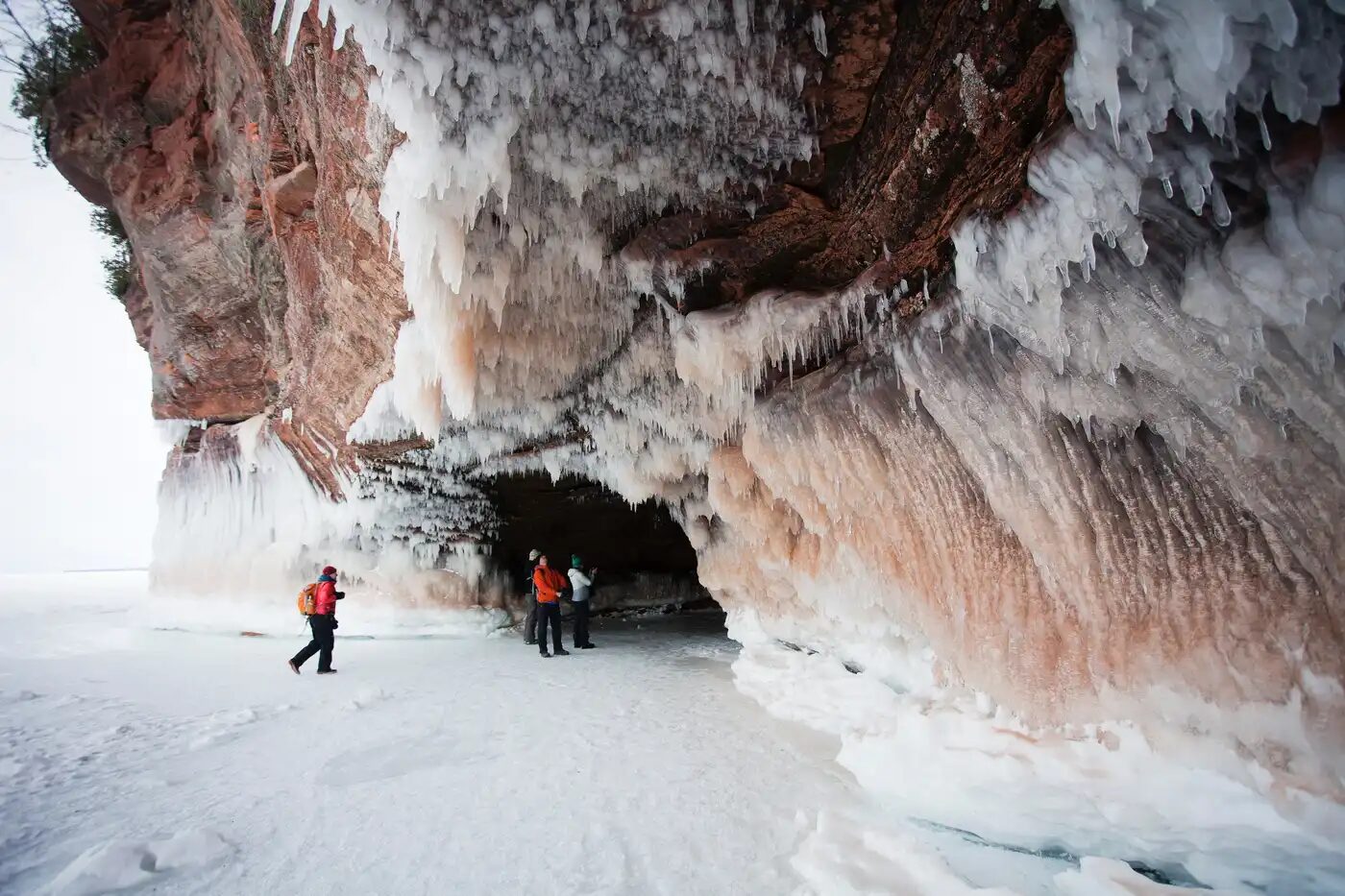
The Apostle Islands Ice Caves reopened for just one extraordinary day on February 16, 2026—the first public access in 11 years and only the sixth opening since 2000—as Lake Superior ice conditions finally met the strict safety thresholds requiring sustained subzero temperatures, low winds, thick quality ice, and coordination between the National Park Service, emergency medical services, ice rescue teams, and regional weather forecasters to ensure safe public access across two miles of frozen lake surface. This Wisconsin ice caves phenomenon attracts hundreds of visitors willing to traverse pack ice from Meyers Beach to reach sea caves formed over centuries by Lake Superior waves, where extraordinary ice formations including dagger-like curtains, delicate spine needles, frozen wave sculptures, and cinnamon-stained ice create one of the most fleeting spectacles within the National Park Service system. The Apostle Islands National Lakeshore Superintendent BriAnna Weldon confirmed this rare winter event occurred through extensive ice testing, interagency coordination, and constant monitoring of the six critical safety factors that determine whether the ice shelf anchored to three land points can support both visitors and emergency vehicles walking miles across Lake Superior’s frozen surface.
The Apostle Islands National Lakeshore ice caves phenomenon represents one of nature’s most unpredictable and ephemeral attractions, accessible only when precise combinations of weather conditions, ice formation, and safety protocols align—often for mere days or hours before conditions deteriorate.
Understanding the Apostle Islands Ice Caves Phenomenon
The Apostle Islands sea caves exist year-round as natural formations carved into sandstone cliffs Wisconsin along the Lake Superior shoreline. These Lake Superior caves formed over centuries through relentless wave action gradually eroding softer sandstone layers while leaving harder formations intact, creating the dramatic overhangs, tunnels, and chambers defining the cave complex.
During winter, when temperatures drop sufficiently and consistently, ice formations Apostle Islands transform these ordinary geological features into extraordinary frozen galleries. The Lake Superior ice creates multiple distinct forms: icicle curtains resembling daggers sharp enough to cleave bodies, delicate spine-like needles growing from cave walls, frozen waves cascading from cave mouths, and ice stained various colors from clear transparency revealing cerulean sky to cinnamon brown from mineral content in freezing water.
The blue ice Apostle Islands coloring results from ice density compressing air bubbles and selectively absorbing red wavelengths while reflecting blue—the same optical phenomenon creating glacier color. The cinnamon-colored ice Wisconsin derives from iron and other mineral compounds in groundwater seeping through sandstone before freezing.
This natural wonder Wisconsin exists only when conditions permit safe access across frozen Lake Superior surface ice—circumstances that haven’t aligned for public access in 11 years prior to the February 16, 2026 opening.
Ice Safety Requirements and Testing Protocols
BriAnna Weldon Apostle Islands Superintendent explained the complex safety protocols determining whether ice caves can open: “This rare winter event occurs only when ice conditions meet minimum safety thresholds. Ice testing is only one part of preparing.”
The six factors ice safety Apostle Islands that must all align simultaneously include:
Sustained low wind to form an unbroken shelf of ice without fracturing from wave action or atmospheric pressure changes. Even moderate winds can destabilize forming ice or break existing shelf ice.
Persistent subzero temperatures enabling strong ice formation thick enough to support human weight and emergency vehicle access. Intermittent warm periods weaken ice integrity even if overall temperatures remain below freezing.
Ice shelf anchored to three land points and extending miles from shoreline to withstand winds and lake currents attempting to dislodge or fracture the ice mass. This anchoring creates structural stability preventing the shelf from breaking free as a floating ice island.
Consistently frozen ground for ice shelf adhesion to land masses, preventing the shelf from separating at the shore junction where land meets frozen lake surface.
Thick, quality lake ice capable of supporting both people and emergency vehicles including ambulances and rescue equipment that may need access in emergency situations.
Auger tests confirming ice stability, thickness, and quality through physical drilling measurements at multiple locations and depths, verifying the ice meets minimum safety standards throughout the walking route.
The National Weather Service Ice Center provides daily forecasts, while the National Park Service regularly checks conditions throughout winter and coordinates with regional ice testing teams. The ice testing protocols Apostle Islands prevent public access until all safety criteria are definitively met—no exceptions or compromises.
Once ice meets safety standards, park staff coordination Apostle Islands must arrange emergency medical services ice rescue positioning, road and transit access, incident response capabilities, and visitor services infrastructure before public access begins. As Superintendent Weldon noted: “Without the support of numerous community partners and extensive interagency coordination, the ice caves event could not happen.”
Historical Opening Patterns and Visitor Numbers
The Apostle Islands Ice Caves history since 2000 reveals just how rare safe access conditions occur: the caves opened to the public for only six of 26 years between 2000 and 2026, with opening durations ranging from single days to a few months depending on how long safe conditions persisted.
The record-breaking 2014 ice caves opening saw 138,000 people visit over a two-month span when exceptionally favorable conditions created extended safe access. This remains the highest ice caves visitation recorded and established public awareness of the phenomenon that persists even through years of closure.
In 2015 ice caves opening, 38,000 visitors accessed the caves during a brief nine-day window before conditions deteriorated—dramatically fewer than 2014 but still representing significant interest given the compressed timeframe.
The 2026 ice caves opening provided just 24 hours notice via social media alerts Apostle Islands, with 2,500 adults paying the $5 entry fee Apostle Islands ice caves for what became a single-day access window on February 16, 2026. Within roughly 24 hours after visitors left, a powerful winter storm broke the ice shelf near Meyers Beach into pieces, with open water visible by 8 A.M. Wednesday morning according to University of Wisconsin Sea Cave Watch monitoring photos.
The Visitor Experience: Walking on Lake Superior
The walk to ice caves Apostle Islands requires traversing approximately two miles across Lake Superior ice from the Meyers Beach starting point. This pack ice walking Wisconsin experience creates surreal sensations as visitors walk atop water normally dangerous and inaccessible, with the two-foot-thick ice providing solid footing yet creating constant awareness of the lake depths below.
The line of visitors ice caves resembles “purposeful ants” as hundreds walk single-file across the frozen expanse toward the sandstone cliffs lined with caves. This shoreline devoid of beaches normally makes caves inaccessible and unsafe, with relentless Lake Superior waves that can crush ice shelves within minutes during warmer conditions.
The ethereal wonderland ice formations visitors encounter justify the wait, travel, and effort required. The ice curtain daggers hanging overhead, delicate spine needles protruding from walls, frozen cascading waves, and varied ice colors create photography and memory opportunities impossible to replicate anywhere else.
The melting ice under powerful sun adds urgency to visits, with exposed ice visibly deteriorating even during the brief access window—a visceral reminder of the phenomenon’s temporary nature.
Visitor Origins and Travel Distances
The February 16, 2026 visitors traveled from Milwaukee to Apostle Islands and Minneapolis to Apostle Islands distances requiring hours of driving—far exceeding the 70-mile trip from Duluth to Apostle Islands that local visitors like the article’s author completed.
The road trip Apostle Islands winter involves winter driving challenges through northern Wisconsin and Michigan’s Upper Peninsula regions where February conditions create hazardous roads even without storms. Visitors from Minneapolis drove approximately 250 miles, while Milwaukee visitors traveled roughly 300 miles—substantial commitments reflecting the phenomenon’s unique appeal.
The single day notice ice caves via social media created logistical challenges for distant visitors needing to arrange time off work, coordinate travel, and reach the site before the brief access window closed. Many who saw the alert couldn’t reach Wisconsin in time, while those who managed to attend witnessed something they may never see again.
The Fleeting Nature and Future Prospects
The powerful winter storm Apostle Islands arriving just 24 hours after the February 16 closure broke the ice shelf, with open water Lake Superior visible by Wednesday morning—stark evidence of how rapidly conditions change and why access windows close with minimal warning.
The National Park Service assessment suggests it’s unlikely sub-zero temperatures return with the calm winds necessary to reform stable ice before spring, making February 16, 2026 likely the only access opportunity for the year. This uncertainty exemplifies the carpe diem reminder these rare openings provide—opportunities that disappear quickly and may not return for years or decades.
The fleeting natural wonder Wisconsin status creates special emotional resonance for those who experience it, with the divine intervention feeling mentioned by visitors reflecting the improbable timing alignments required to witness the caves. For those who spent years visiting the area without encountering open conditions, finally accessing the caves feels like exceptional fortune rather than mere scheduling success.
For travelers hoping to witness the Apostle Islands Ice Caves, patience and flexibility prove essential. Following the National Park Service Apostle Islands social media channels enables rapid response when conditions align, though geographic proximity to northern Wisconsin significantly increases the likelihood of reaching Meyers Beach within narrow access windows.
For comprehensive coverage of rare natural phenomena, national park highlights, and extraordinary travel opportunities across America’s most spectacular destinations, The Inspiring Insight delivers timely alerts and expert guidance. Explore our national parks and natural wonders sections for ongoing coverage of ephemeral attractions requiring perfect timing and good fortune to experience.