
Tennessee historic landmarks span 15,000 years of human history from nomadic early inhabitants and prehistoric indigenous settlements along the Tennessee River, Cumberland River, and Hiwassee River through American Revolution frontier forts, Civil War battlefields including Shiloh, and early 20th-century Appalachian resort communities within Great Smoky Mountains National Park. The Tennessee historical sites collection preserved across the state creates unique opportunities for history-focused travel through sacred indigenous grounds Tennessee, frontier-era trading posts, presidential estates, Civil War battle sites Tennessee, and abandoned mountain resort towns—each offering maintained buildings, original artifacts, and engaging exhibits that bring different chapters of American history to life. These five Tennessee historic destinations—Pinson Mounds State Archaeological Park, Cragfont State Historic Site, Andrew Jackson’s Hermitage, Shiloh National Military Park, and Elkmont Historic District—represent distinct historical periods accessible through history road trip Tennessee itineraries or individual deep-dive visits providing immersive experiences for travelers with historical inclinations.
The Tennessee historic preservation efforts ensure these sites maintain authenticity while accommodating modern visitors through trails, guided tours, interpretive exhibits, and special events that connect contemporary audiences with the state’s multi-layered past.
Pinson Mounds State Archaeological Park: Prehistoric Indigenous Heritage
Pinson Mounds State Archaeological Park represents Tennessee’s most significant prehistoric indigenous site and the largest ancient mound complex Tennessee, dating to the Middle Woodland Period (A.D. 0-500) when indigenous civilizations built settlements along river banks before European contact.
The Pinson Mounds prehistoric site spans nearly 400 acres with 13 confirmed earthwork mounds along the Forked Deer River bluff. The centerpiece, Saul’s Mound Tennessee, stands as the tallest Middle Woodland mound in the United States—holding distinction as the highest human-made structure in America for its first 1,000 years of existence according to The Tennessee Magazine.
The archaeological significance Pinson Mounds extends beyond size to include its function as astronomical calendar through mound positioning and alignments. Modern research suggests the mound complex served ceremonial, astronomical, and possibly political purposes for the indigenous communities that constructed these massive earthworks without metal tools or domesticated draft animals.
Visiting Pinson Mounds free admission enables budget-conscious history exploration, with the park located approximately 10 minutes from Henderson Tennessee and under two hours from Memphis. The Pinson Mounds hiking trails range from 0.2 to 2.5 miles, accommodating various fitness levels and time commitments while providing access to different mounds and archaeological features.
The climbing Saul’s Mound experience requires navigating steep stairs but rewards effort with expansive views Tennessee floodplain from the summit platform. This perspective helps visitors understand how indigenous peoples selected elevated positions for ceremonial and practical purposes, leveraging natural topography enhanced through construction.
Tripadvisor reviews consistently praise the well-maintained concrete walking paths and adventurous woodland trails, noting the site’s peaceful atmosphere and educational value. The combination of accessible paths and more challenging trails enables diverse visitor experiences within the same visit.
Cragfont State Historic Site: Late Georgian Frontier Mansion
Cragfont State Historic Site preserves the James Winchester mansion representing Tennessee frontier history and early statehood architecture. Winchester, an American Revolution officer and Memphis co-founder, built this late Georgian mansion starting in 1798 near Castalian Springs outside Nashville.
The Cragfont mansion Tennessee succeeded Fort Tuckahoe, Winchester’s earlier settlement attempt frequently attacked during frontier conflicts between European settlers and indigenous peoples defending territorial claims. The transition from fort to mansion symbolizes the consolidation of Euro-American control over Middle Tennessee during the early republic period.
The mansion’s architectural significance stems from its refined late Georgian style considered among Tennessee’s finest period buildings, featuring custom-crafted furniture pieces remaining in original locations. This furniture provenance adds authenticity distinguishing house museums where period pieces originate from the actual families who occupied spaces.
Cragfont visiting hours run April through November, Thursdays to Sundays—seasonal scheduling requiring advance planning. The 50-minute drive from Nashville positions the site for day trips or regional touring combinations with other Middle Tennessee historic sites.
The Cragfont guided tours receive consistent praise for guide knowledge and passion, with visitors emphasizing how expert interpretation transforms architectural viewing into immersive historical experience. The tours cover mansion interiors with period furnishings, surrounding gardens, and family graveyard—providing comprehensive understanding of 19th-century Tennessee plantation life.
Special events Cragfont include Hidden History tours accessing normally restricted areas like attics and cellars, plus October theatrical ghost story nights appealing to audiences seeking entertainment alongside education. These programming variations encourage repeat visitation beyond initial tours.
Andrew Jackson’s Hermitage: Presidential Estate and Slavery Memorial
The Hermitage ranks among Nashville’s most cherished historic sites, holding 2025 Traveler’s Choice awards and National Historic Landmark designation. The estate functioned as President Andrew Jackson’s home from 1804 onward, evolving from frontier plantation to memorial site addressing both Jackson’s political legacy and enslaved people who supported his wealth.
The Hermitage mansion Nashville showcases Federal-style architecture largely dating to 1837 reconstruction following fire, containing original Jackson family heirlooms, period wallpaper, and furnishings documenting early 19th-century upper-class life. However, the 1,100-acre site encompasses far more than the mansion, including dozens of structures providing comprehensive plantation context.
The Andrew Jackson plantation history interpretation increasingly emphasizes enslaved people’s experiences through restored slave cabins, archaeological research, and the recently discovered Enslaved Cemetery Hermitage identified in 2024. This cemetery’s addition to visitor experiences represents evolving historical interpretation acknowledging slavery’s centrality to Jackson-era prosperity.
The memorial significance extends beyond Jackson’s tomb to encompass the broader community—enslaved and free—that inhabited the estate. Contemporary interpretation balances celebrating Jackson’s political achievements with critically examining the human costs of slavery-based economies sustaining 19th-century Southern elites.
Visiting Hermitage Nashville requires 25-minute drive from downtown, with daily hours 9:30 a.m. to 4 p.m. and paid admission granting comprehensive grounds access. Reviewers consistently praise the spectacular gardens, education center, museum store, and café facilities supporting extended visits beyond guided mansion tours.
The self-paced exploration model enables visitors to spend varying time amounts depending on interests—some focusing primarily on mansion tours while others extensively explore grounds, slave quarters, archaeological sites, and gardens. This flexibility accommodates diverse learning styles and stamina levels.
Shiloh National Military Park: Preserved Civil War Battlefield
Shiloh National Military Park preserves the Battle of Shiloh site—the largest Civil War engagement in the Mississippi Valley with over 23,000 casualties. The 5,200-acre park maintains remarkable battlefield authenticity through minimal modern development, enabling visitors to experience landscapes resembling 1862 combat conditions.
The Shiloh battlefield preservation includes wooded ravines, sunken roads, and positioned artillery pieces creating tangible connections to combat realities. Unlike urbanized battlefields where development encroaches on historic landscapes, Shiloh’s rural location enables comprehensive preservation of battlefield geography essential for understanding tactical decisions and combat flow.
The living history museum Shiloh concept emphasizes landscape interpretation over excessive monuments, with strategically placed markers and artillery creating contemplative rather than dramatized atmospheres. This restraint encourages visitor reflection on human costs of warfare rather than glorifying military action.
The Shiloh National Cemetery contains over 3,500 Civil War soldiers’ remains, most unidentified—a sobering reminder of conflict’s human toll and 19th-century identification limitations. Cemetery maintenance by National Park Service honors these fallen soldiers while providing meditation spaces on war’s consequences.
Visiting Shiloh free admission (NPS property) enables budget-friendly Civil War history exploration approximately two hours from Memphis. The extensive acreage requires planning—walking the complete grounds spans 4-8 hours depending on pace and route selections.
The Shiloh self-guided auto tour provides efficient alternative covering 22 stops across 12.7 miles, with route maps available at visitor centers. This driving option accommodates visitors with time constraints, mobility limitations, or preferences for vehicle comfort while maintaining comprehensive site interpretation.
Elkmont Historic District: Abandoned Appalachian Resort Town
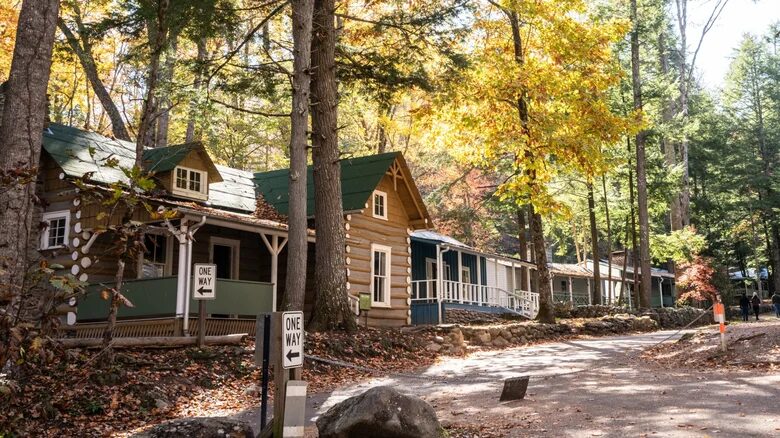
Elkmont Historic District within Great Smoky Mountains National Park preserves 19 structures from an early 20th-century logging town turned Appalachian vacation community. The site’s evolution from Little River Logging Company operations (established 1900) through resort community development to eventual abandonment and preservation creates unique ghost town atmosphere.
The Elkmont logging town history reflects industrial exploitation of Appalachian resources during the industrial age, when timber companies established communities supporting extraction operations. Railroad connections enabling lumber transport simultaneously facilitated tourism development as wealthy families seeking mountain retreats accessed previously remote areas.
The Elkmont resort community Tennessee persisted until the 1990s when private leases expired and Great Smoky Mountains National Park reclaimed the area. The decision to preserve select structures through National Historic Register listing balanced wilderness restoration with cultural heritage conservation.
The abandoned cabins Elkmont in areas designated Daisy Town and Millionaire’s Row create eerie exploration opportunities, with visitors entering deteriorating structures imagining former resort life. The Daisy Town cottages near parking lots provide easily accessible exploration, while Millionaire’s Row’s larger vacation homes deeper in woods require extended hiking.
The Little River Trail Elkmont connects preserved structure clusters, spanning 12.4 miles total though historic sites concentrate within shorter distances. This trail system accommodates both casual visitors exploring nearby structures and serious hikers seeking extended backcountry experiences.
Visiting Elkmont free admission positions it as budget-friendly Smoky Mountains activity, located just over one hour from Knoxville. The Elkmont Campground (open April-November) enables overnight stays within the historic district, combining camping with heritage site exploration in unified experiences.
Planning Your Tennessee History Tour
Creating effective Tennessee history travel itineraries requires considering geographic distribution, time commitments, and thematic interests. The sites span the state from Memphis proximity (Pinson Mounds, Shiloh) through Middle Tennessee (Cragfont, Hermitage near Nashville) to East Tennessee (Elkmont in Smoky Mountains).
A comprehensive history road trip Tennessee might follow chronological progression: Pinson Mounds (prehistoric), Cragfont (frontier), Hermitage (early republic), Shiloh (Civil War), and Elkmont (industrial era). Alternatively, geographic clustering enables efficient regional exploration: Memphis-area sites, Nashville-area sites, or Smoky Mountains sites.
Seasonal considerations affect access, with Cragfont operating April-November and Elkmont Campground similarly seasonal. Shiloh and Hermitage maintain year-round access though weather affects outdoor comfort. Pinson Mounds operates year-round with trail conditions varying seasonally.
For travelers passionate about American history seeking authentic, well-preserved sites that illuminate diverse historical periods through tangible landscape features, architectural preservation, and expert interpretation, these five Tennessee destinations deliver immersive experiences impossible to replicate through books or digital media alone.
For comprehensive coverage of historical travel destinations, heritage site preservation, and cultural tourism across America and beyond, The Inspiring Insight provides expert guidance and practical information. Explore our history and travel sections for ongoing insights on connecting with the past through meaningful site visits.