
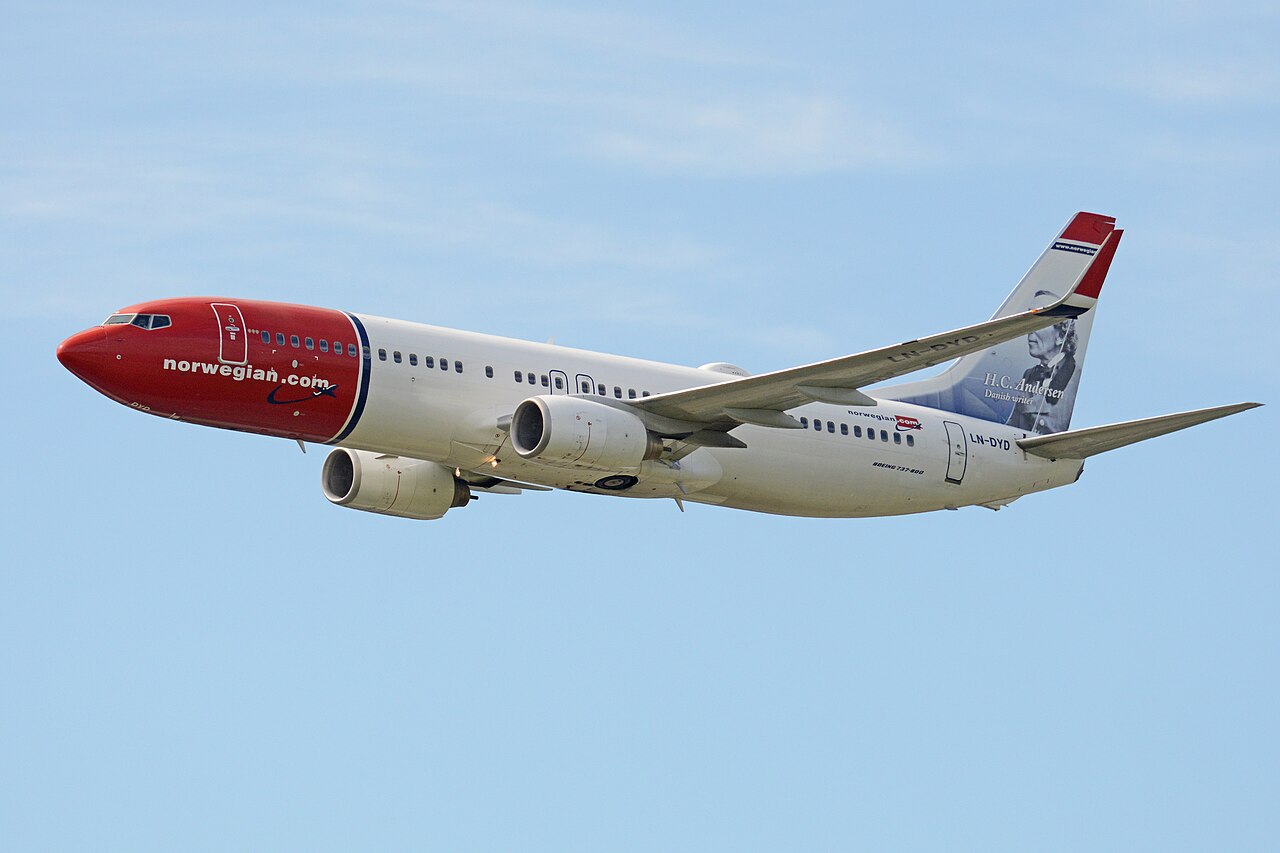
A London Gatwick-bound Norwegian Boeing 737 MAX 8, flight DY1308, made a shocking mid-flight emergency landing after being forced to divert from its original path. The aircraft, departing from Oslo, Norway, was en route to Gatwick when the unexpected occurred. Norwegian Air Sweden’s Boeing 737 MAX 8, a well-known aircraft model, declared an emergency at 38,000 feet. Within an hour and twenty minutes into the flight, panic surged in the skies as the crew sent out a distress signal, diverting the plane towards Amsterdam Schiphol. The passengers, left in complete shock, found themselves with no choice but to brace for an emergency landing at Amsterdam instead of their intended destination, London Gatwick.
This sudden and intense shift in plans raised alarming questions about the safety of air travel and the Boeing 737 MAX 8. Norwegian Air Sweden, already well-known for its operations in Europe, now faces renewed scrutiny after this harrowing mid-flight emergency. As the aircraft safely landed in Amsterdam, what was meant to be a smooth journey to Gatwick turned into a nightmare for those on board.
Flight DY1308: The Timeline of Events
A terrifying mid-air crisis unfolded as Norwegian Air Sweden’s Flight DY1308, bound for London Gatwick, was forced to declare an emergency at 38,000 feet. Passengers aboard the Boeing 737 MAX 8 faced moments of sheer panic as the aircraft experienced a life-threatening situation mid-flight.
Departure from Oslo and Initial Flight Phase
Norwegian Air Sweden Flight DY1308 had taken off from Oslo, Norway, at 15:26 CET, embarking on a routine journey to Gatwick Airport, London. What was meant to be a typical 2-hour flight suddenly took a terrifying turn.
The Boeing 737 MAX 8, registration SE-RPH, reached cruising altitude at 38,000 feet and was maintaining steady flight until things went horribly wrong. The aircraft was operating normally during the initial climb and leveling phase, with passengers settling in for what should have been an uneventful journey across the North Sea.
The Critical Moment: Emergency Declaration
Just 1 hour and 20 minutes into the flight, disaster struck as the aircraft descended sharply to 36,000 feet. The crew, aware of the looming threat, had no choice but to declare an emergency, squawking the distress signal 7700.
The emergency code 7700 is an internationally recognized transponder code that immediately alerts air traffic control to a serious situation requiring priority handling. This code ensures that the aircraft receives immediate attention from controllers and that emergency services at the destination airport are placed on standby.
What Triggered the Emergency at 38,000 Feet?
The sudden emergency raised alarms throughout the cabin, as the aircraft’s crew initiated protocols to safeguard all aboard. Passengers experienced heightened tension as the aircraft made an unexpected shift in altitude.
Technical Analysis of the Incident
Experts have yet to confirm the exact cause of the emergency, but the significance of squawking 7700—an international emergency code—shows just how serious the situation was. The descent from 38,000 feet to 36,000 feet suggests the crew may have been responding to a pressurization issue, technical malfunction, or other critical system failure.
Aviation safety protocols require crews to declare emergencies whenever passenger or aircraft safety may be compromised. The decision to squawk 7700 indicates the crew assessed the situation as requiring immediate priority handling and potential emergency response upon landing.
With the situation becoming increasingly critical, the decision was made to divert the flight, taking the distressed aircraft on a drastic detour toward Amsterdam Schiphol Airport. The tension and uncertainty hung thick in the air.
Emergency Diversion to Amsterdam Schiphol
In a move to ensure the safety of everyone onboard, Norwegian Air’s flight DY1308 began its diversion to Amsterdam Schiphol Airport, away from the planned destination of Gatwick. Schiphol, renowned for its world-class facilities and emergency handling capabilities, was well-equipped to provide assistance in a time of crisis.
Why Amsterdam Instead of Gatwick?
The choice to divert to Amsterdam rather than continue to Gatwick likely reflected several factors. Schiphol’s proximity to the aircraft’s position at the time of the emergency would have reduced flight time with a potential problem onboard. Additionally, Amsterdam Schiphol ranks as one of Europe’s major hubs with extensive emergency response capabilities and medical facilities.
The distress signal echoed across the airwaves, alerting authorities and ground personnel, who were ready for the plane’s safe arrival. But for those onboard, the diversion signified an agonizing detour that saw passengers nervously awaiting their fate as they hurtled through the skies over Europe.
Air traffic control would have cleared airspace and given the aircraft priority routing to Amsterdam, ensuring the fastest possible path to a safe landing.
Implications for Norwegian Air and the Boeing 737 MAX 8
While the immediate concerns for Flight DY1308 were addressed with a successful diversion to Amsterdam, the implications for Norwegian Air’s reputation and its use of the Boeing 737 MAX 8 are substantial.
Boeing 737 MAX 8 Safety Record
This incident follows the broader scrutiny surrounding the MAX 8 aircraft following previous safety issues and is likely to raise questions about its reliability moving forward. The Boeing 737 MAX 8 was grounded worldwide from March 2019 to late 2020 following two fatal crashes that killed 346 people.
Since returning to service after extensive modifications and recertification, the MAX 8 has operated millions of flight hours. However, any emergency involving this aircraft model receives heightened attention due to its troubled history.
Passengers, while eventually safe, are left wondering about the safety of their future flights, especially given the current state of the aviation industry and the challenges the 737 MAX 8 has faced in regaining its trust with travelers worldwide.
Passenger Experience During the Emergency
For those onboard Norwegian Air’s DY1308, the emergency event was nothing short of terrifying. Passengers reported feeling the jolt and sudden descent, the shock of hearing the emergency declaration, and the anxiety of realizing that the plane was being diverted.
Crew Response and Safety Procedures
As with any high-stakes emergency in aviation, the crew worked tirelessly to ensure the safety of passengers, but the reality of the situation can never be fully prepared for. Flight attendants would have secured the cabin, ensured passengers were properly seated with seatbelts fastened, and prepared for potential evacuation procedures upon landing.
Passengers left on edge, desperate for clarity, wondering about the safety of the skies in general. The psychological impact of such events can be significant, with some passengers experiencing anxiety about future air travel even after safe landings.
Modern aircraft crews receive extensive training in emergency procedures, communication with passengers during crises, and coordination with ground-based emergency services. This training likely proved invaluable during the DY1308 incident.
Broader Aviation Safety Considerations
This mid-flight emergency not only casts a shadow over the specific flight but also raises larger questions regarding the Boeing 737 MAX 8 and the airline industry at large. Norwegian Air, in particular, must now deal with the fallout of such an alarming event and address growing concerns about the safety and future of this aircraft model.
Regulatory Oversight and Investigation
Aviation regulators, industry analysts, and concerned passengers alike will be closely monitoring any investigation that follows this emergency. The effects of today’s event could be long-lasting for both Norwegian Air and the wider airline industry.
European Union Aviation Safety Agency (EASA) and national aviation authorities will likely review the incident to determine its cause and whether any systemic issues require addressing. Such investigations typically examine maintenance records, crew performance, technical systems, and operational procedures.
Norwegian Air Sweden will need to provide detailed reports on the incident, including cockpit voice recorder data, flight data recorder information, and maintenance logs for the aircraft involved.
What This Means for Passengers
Travelers booked on Norwegian Air flights or those scheduled to fly on Boeing 737 MAX 8 aircraft may understandably feel concerned following this incident. However, several important points deserve consideration:
Statistical safety: Despite this emergency, modern commercial aviation remains extraordinarily safe, with incidents per flight hour at historic lows.
Emergency procedures work: The successful diversion and landing demonstrate that aircraft systems, crew training, and emergency protocols function as designed.
Passenger rights: Those affected by the diversion likely qualify for compensation under EU regulation EC 261/2004, which provides rights for passengers experiencing significant delays or diversions.
Transparency: The aviation industry’s commitment to investigating and learning from every incident continuously improves safety across the entire sector.
Norwegian Air’s Response and Passenger Support
Norwegian Air Sweden has a responsibility to support passengers affected by the diversion, including arranging onward travel to London Gatwick, providing accommodation if necessary, and addressing compensation claims.
The airline’s communication regarding the incident will be crucial for maintaining passenger confidence. Clear, honest explanations about what occurred and what steps are being taken to prevent recurrence help restore trust after such events.
Passengers should retain all documentation related to the incident, including boarding passes, expense receipts for accommodations or meals, and any communication from the airline. This documentation supports compensation claims and insurance filings.
Understanding Your Rights as a Passenger
Under European Union regulations, passengers experiencing flight diversions to airports significantly distant from their intended destination have rights to:
- Care and assistance: Meals, refreshments, and hotel accommodation if an overnight stay becomes necessary
- Communication: Two phone calls, emails, or faxes
- Compensation: Depending on circumstances, monetary compensation for significant delays
- Reimbursement or rerouting: Choice between refund of unused tickets or alternative transport to the final destination
Passengers on DY1308 should contact Norwegian Air directly to understand their specific entitlements based on this incident.
Lessons for Travelers
This incident reminds all air travelers of several important considerations:
Travel insurance provides valuable protection against unexpected diversions, delays, and expenses. Comprehensive policies cover accommodations, meals, and alternative transportation costs.
Flexibility in travel plans helps reduce stress when unexpected events occur. Building buffer time around connections and important events provides breathing room for delays.
Stay informed about aircraft types and airline safety records when booking flights. While all commercial aviation is highly regulated and safe, some travelers prefer certain airlines or aircraft based on personal comfort levels.
Know your rights as a passenger under applicable regulations. Understanding entitlements helps you advocate for proper treatment during disruptions.
For comprehensive aviation news, flight safety updates, and passenger rights information, visit The Inspiring Insight where we provide expert coverage of airline incidents, travel disruptions, and passenger advocacy. Stay informed with our ongoing analysis of aviation safety trends, airline industry developments, and practical advice that helps you navigate air travel confidently and protect your rights as a passenger.