Metropolitan Touring is expanding its Galapagos cruise offerings with two new extended itineraries designed for both first-time and return visitors—Islands of Fire Adventure and Origin of the Species Adventure—launching aboard La Pinta yacht and Isabela II ship as eight-night programs providing wildlife-centric experiences encountering almost all of Galapagos’ iconic “Big 15” species including blue-footed boobies, Galapagos sea lions, land iguanas, giant tortoises, and American flamingos across multiple pristine islands. Adrián Peñafiel, vice president of marketing and sales for Metropolitan Touring, describes the new eight-night itineraries as “a double espresso for Galapagos travelers” combining “two exceptional itineraries into one seamless voyage that delivers a rich and immersive experience” through carefully curated island stops maximizing wildlife encounters and biodiversity exposure. The extended Galapagos cruises Metropolitan Touring represent significant expansion beyond standard shorter programs, giving travelers more time to explore remote locations like Genovesa Island seabird colonies, Fernandina’s pristine environments, and historic Darwin research sites while snorkeling with Galapagos penguins at multiple unique locations across the archipelago.
The Metropolitan Touring Galapagos expeditions build on the company’s decades of experience operating in the protected archipelago, now offering more comprehensive itineraries for wildlife enthusiasts and nature photographers seeking extended immersion in this unique ecosystem.
Understanding the Extended Itinerary Concept
The new eight-night Galapagos programs represent substantial extensions from typical four- or five-night cruises dominating the market. This extended Galapagos cruise duration enables more time encounter Galapagos Big 15 species through additional island visits and increased opportunities for wildlife observation during optimal times of day.
The wildlife-centric itineraries design prioritizes encounters with iconic Galapagos species including blue-footed boobies, Galapagos sea lions, land iguanas, giant tortoises, American flamingos, and other endemic and native species that make the archipelago legendary among naturalists and ecotourists.
Peñafiel’s characterization as “double espresso Galapagos travelers” captures the intensified experience these two exceptional itineraries combined seamless voyage provide compared to shorter alternatives. The rich immersive experience Galapagos emerges from spending additional days among the islands, enabling deeper appreciation of ecosystem interconnections and species behaviors.
Islands of Fire Adventure: Volcanic Landscapes and Marine Life
The Islands of Fire Adventure Isabela II operates aboard the Isabela II ship, visiting eight islands Galapagos through a carefully sequenced route maximizing wildlife diversity and geological interest.
Santa Cruz Island Charles Darwin Research Station provides essential context about Galapagos conservation efforts and ongoing scientific research supporting the archipelago’s protection. The research station visit enables travelers to understand breeding programs for endangered species and habitat restoration initiatives.
Bartolomé Island snorkeling penguins offers one of the few opportunities globally to snorkel with penguins, as the Galapagos penguin represents the world’s only penguin species living north of the equator. The island’s distinctive Pinnacle Rock landmark creates iconic photography opportunities alongside unique marine encounters.
Santiago Island Buccaneer Cove features dramatic volcanic cliffs where travelers spot fur seals in rocky alcoves and visit Chinese Hat islet, a small cone-shaped island named for its profile and favored by Galapagos penguins nesting. The fur seal colonies Santiago thrive in this rugged coastline environment.
Fernandina Island pristine environment represents the archipelago’s youngest and most volcanically active island, where the lack of introduced species maintains ecosystems in near-pristine condition. The marine iguana colonies Fernandina are among the world’s largest concentrations of these unique reptiles.
Wildlife-rich Isabela Island as the archipelago’s largest island provides diverse habitats from mangrove lagoons hosting American flamingos to volcanic highlands sheltering giant tortoise populations. The island’s complex geology creates multiple distinct ecosystems within relatively short distances.
Genovesa Island Bird Island earns its nickname through extraordinary seabird colonies including red-footed boobies, Nazca boobies, frigatebirds, and swallow-tailed gulls. The island’s relative remoteness and limited human disturbance enable remarkable wildlife density and approachability.
Origin of the Species Adventure: Darwin’s Historic Route
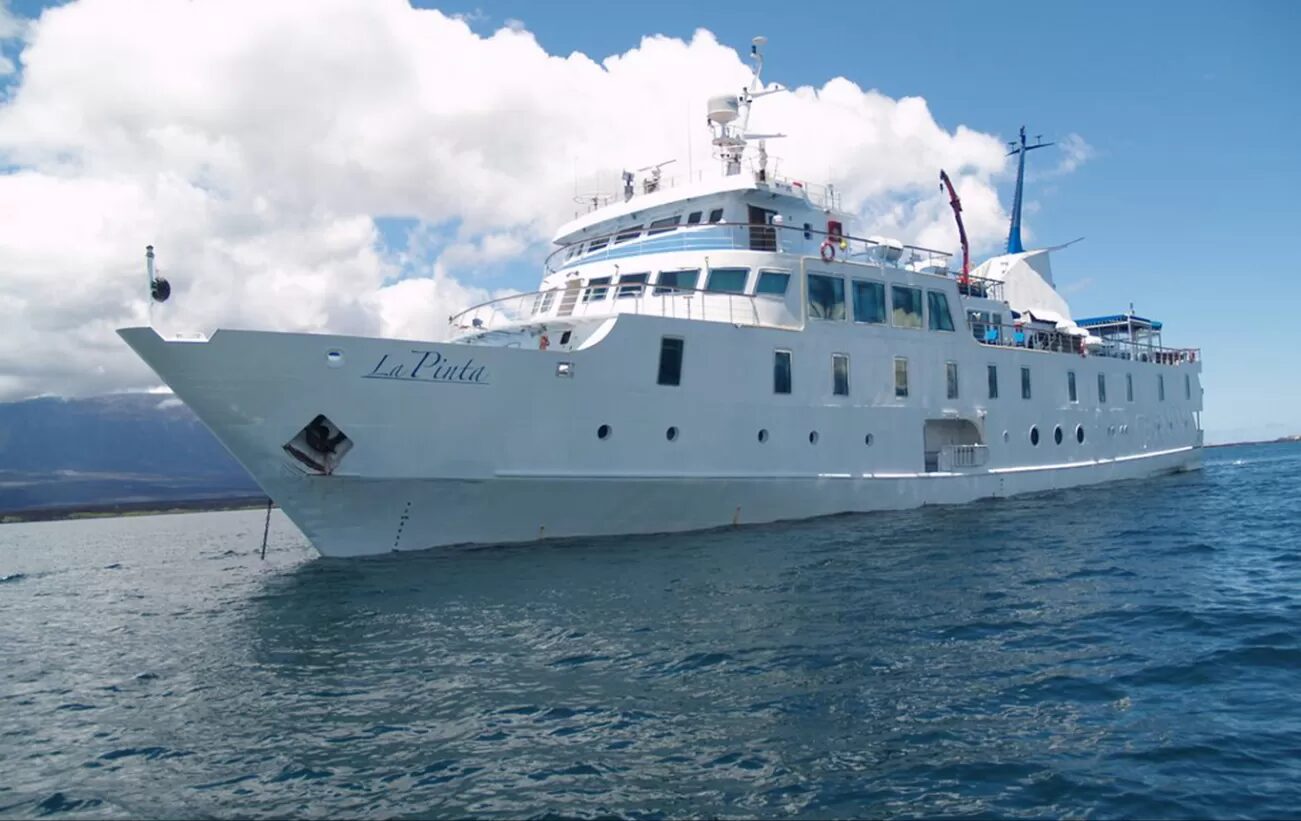
The Origin of Species Adventure La Pinta sails aboard the La Pinta yacht, following a route rich Darwin history biodiversity that traces pathways explored by Charles Darwin during the HMS Beagle voyage inspiring his evolutionary theories.
Beginning Baltra Island provides the standard entry point for most Galapagos visitors, with the itinerary immediately proceeding to South Plaza Island known for land iguana populations and hybrid iguana species resulting from marine and land iguana interbreeding—a living demonstration of evolutionary processes.
Santa Fe Island endemic species include the Santa Fe land iguana found nowhere else on Earth, alongside extensive Opuntia cactus forests that these iguanas depend upon for food and shelter.
San Cristóbal Cerro Colorado Tortoise Habitat features one of the archipelago’s tortoise breeding centers where visitors observe giant tortoise conservation programs working to recover populations from near extinction. The Punta Pitt landing on San Cristóbal’s eastern tip provides the archipelago’s only site where all three booby species (blue-footed, red-footed, and Nazca) can be observed together.
Cerro Brujo San Cristóbal offers a stunning white sand beach formed from coral rather than volcanic material, creating distinctive coastal scenery alongside excellent snorkeling opportunities and sea lion interactions.
Española Island full day dedicates extended time to this southern island featuring seabird colonies Punta Suárez including the archipelago’s entire population of waved albatrosses (present April-December during breeding season). The snorkeling Gardner Bay provides encounters with sea lion playfulness and diverse tropical fish species in protected waters.
Eden Islet exploration near Santa Cruz offers additional marine iguana viewing and seabird observation in a compact, easily accessible location.
Bartolomé Sullivan Bay combines the iconic Pinnacle Rock views with lava flow formations Sullivan Bay demonstrating recent volcanic activity and the early stages of ecosystem colonization on fresh lava fields.
Ending Genovesa Island concludes the voyage at this remote northern island, providing finale encounters with seabird density unmatched elsewhere in the archipelago.
The “Big 15” Galapagos Species
The Galapagos Big 15 iconic species reference encompasses the archipelago’s most sought-after wildlife encounters:
- Galapagos giant tortoises – Multiple subspecies across different islands
- Marine iguanas – World’s only oceangoing lizards
- Land iguanas – Yellow-colored terrestrial reptiles
- Blue-footed boobies – Famous for distinctive feet and mating dance
- Red-footed boobies – Tree-nesting seabirds
- Nazca boobies – White plumage coastal nesters
- Galapagos sea lions – Playful and abundant pinnipeds
- Galapagos fur seals – Smaller, shyer seal relatives
- American flamingos – Salt lagoon specialists
- Galapagos penguins – Equatorial penguin species
- Flightless cormorants – Evolution-demonstrating seabirds
- Waved albatrosses – Española Island specialists
- Frigatebirds (magnificent and great) – Aerial pirates
- Galapagos hawks – Apex land predators
- Darwin’s finches – Multiple species central to evolutionary theory
The eight-night itineraries encounter almost all Big 15 through strategic island selection and timing, whereas shorter cruises typically encounter 8-10 species depending on route and season.
Vessel Specifications and Experience
The Isabela II ship and La Pinta yacht offer different onboard experiences while maintaining high standards for naturalist-guided expeditions. Both vessels feature naturalist guides Galapagos, air-conditioned cabins, observation decks, and dining emphasizing fresh, locally-sourced ingredients when possible within the archipelago’s strict importation controls.
The smaller vessel size compared to large cruise ships enables access to remote Galapagos landing sites with limited visitor quotas and provides more intimate wildlife viewing experiences with smaller shore excursion groups.
Booking Considerations and Seasonality
Galapagos travel planning for these extended itineraries requires understanding that the archipelago year-round destination offers different experiences across seasons:
December-May warm/wet season brings calmer seas, warmer water temperatures ideal for extended snorkeling, and peak nesting activity for many seabird species.
June-November cool/dry season features cooler air and water temperatures, more active seas, but also peak season for certain species including waved albatrosses and whale shark sightings.
The eight-night cruise booking requires more vacation time commitment than shorter alternatives, but the additional wildlife encounters and reduced daily pacing create less rushed experiences with more opportunities for photography, relaxation, and processing the remarkable ecosystems encountered.
Conservation and Responsible Tourism
Metropolitan Touring Galapagos conservation commitment extends beyond itinerary design to operational practices supporting the archipelago’s protection. The company’s long history in the islands includes pioneering ecotourism practices and supporting local conservation initiatives.
The strict Galapagos National Park regulations governing visitor sites, group sizes, and guide requirements ensure that even with tourism growth, individual wildlife encounters remain pristine and educational. The naturalist guide requirement means every shore excursion includes expert interpretation of observed species, behaviors, and ecosystems.
For travelers seeking the ultimate Galapagos wildlife experience with time to fully appreciate the archipelago’s remarkable biodiversity, these new extended itineraries provide unprecedented access to iconic species and remote locations while maintaining the sustainable tourism practices essential for preserving these irreplaceable ecosystems.
For comprehensive Galapagos travel guides, wildlife photography tips, and sustainable ecotourism resources across global destinations, The Inspiring Insight provides expert recommendations and practical planning information. Explore our nature travel and wildlife expedition sections for ongoing coverage of remarkable natural destinations and responsible travel practices.