
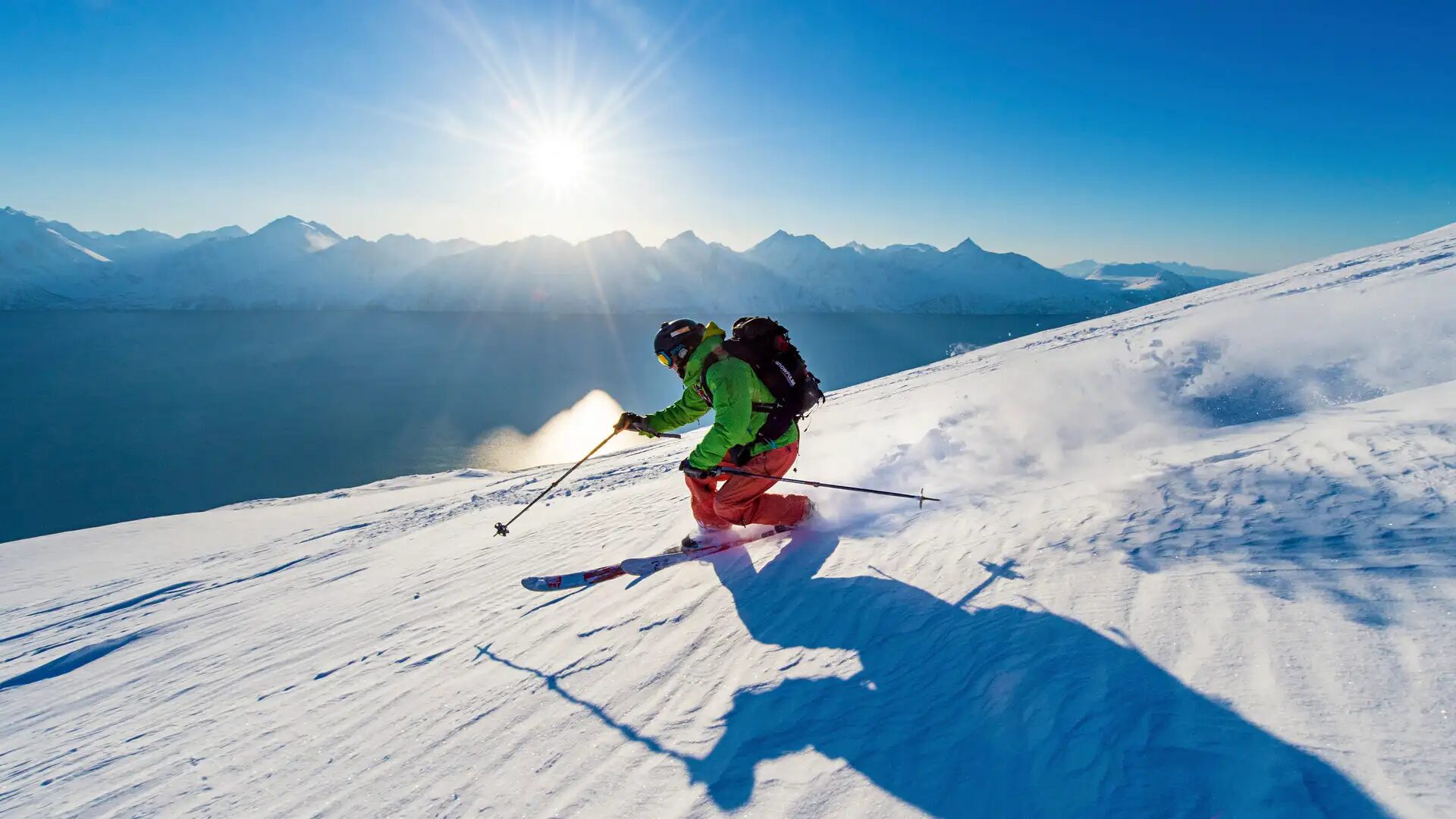
Ski touring in Arctic Norway involves complex terrain, rapidly changing weather systems, and limited infrastructure in remote areas. While the region attracts experienced ski tourers, its environmental conditions require a higher level of preparation and risk awareness than many alpine destinations. Understanding these factors and planning accordingly is essential for managing exposure and reducing risk during a ski touring trip in northern Norway.**
The Arctic landscape presents unique challenges that distinguish it from conventional backcountry skiing environments. From steep elevation changes that rise directly from sea level to seasonal light conditions that affect visibility and timing decisions, every aspect of ski touring in this region demands respect and careful consideration.
Why Ski Touring in Norway Is Unique
Several environmental factors distinguish ski touring in northern Norway from more traditional alpine destinations:
The Arctic landscape: Mountains rise directly from sea level, creating steep elevation changes and complex transitions between terrain types. This increases exposure to weather and requires careful route selection. Unlike traditional alpine environments where valleys provide gradual approaches, Norwegian mountains often demand immediate engagement with technical terrain.
Seasonal light conditions: Depending on the time of year, travelers may encounter limited daylight during polar night or extended daylight later in the season. Both conditions affect visibility, fatigue management, and timing decisions. During polar night (November through January), skiers may tour entirely in twilight or darkness, requiring headlamps and altered navigation strategies.
Remote environments with limited infrastructure: Many touring areas are far from populated centers, with restricted road access and fewer rescue resources. Group self-sufficiency and conservative planning become essential. Cell phone coverage is often absent, and helicopter evacuation may be delayed by weather conditions.
Top Ski Touring Regions in Norway
Norway offers a variety of ski touring regions, each with its own appeal and specific challenges:
Lofoten: Famous for its dramatic fjords and peaks, Lofoten is a remote and stunning destination for experienced skiers. The terrain varies from steep alpine slopes to rolling hills, perfect for those seeking adventure. Lofoten ski touring combines technical descents with spectacular coastal mountain scenery. The proximity to the ocean creates unique maritime snowpack conditions that differ significantly from continental snow.
Lyngen Alps: Known for its steep terrain and rugged beauty, the Lyngen Alps are a must-visit for advanced skiers looking for a challenging experience. The region offers classic ski mountaineering routes with sustained vertical descents of 800-1,400 meters. Lyngen provides excellent access via boat-based touring, allowing skiers to reach remote peaks inaccessible by road.
Finnmark: Located above the Arctic Circle, Finnmark offers vast, wide-open spaces and pristine wilderness. The terrain here is more moderate, making it suitable for intermediate skiers. Finnmark’s gentler topography provides an excellent introduction to Arctic ski touring while still demanding proper winter skills and navigation.
Svalbard: Situated far north, beyond the Arctic Circle, Svalbard is one of the most remote and striking destinations for ski touring in Norway. Known for its combination of rugged mountains, glaciers, and vast, isolated polar landscapes, it’s ideal for experienced skiers looking to embrace extreme conditions. Svalbard ski touring requires polar bear safety protocols in addition to standard backcountry precautions.
Rescue coverage in Svalbard extends to most touring areas, though evacuation in the most remote zones may require special arrangements. The extreme Arctic environment demands the highest level of self-sufficiency and emergency preparedness.
How To Prepare for a Safe Ski Touring Trip
Ski touring in the Arctic requires special preparation, particularly given the challenging weather conditions and remote locations. Here’s how to ensure you’re ready for the adventure:
1. Hire a Certified, Experienced Guide
An IFMGA-certified guide is your best bet for ensuring safety in the Arctic’s harsh and unpredictable environment. A certified guide offers expertise in route planning, snowpack assessment, and adapting to changing weather conditions. Local guides or those familiar with the terrain are even more valuable, as they can help you navigate the nuances of the region.
Professional mountain guides understand the specific avalanche patterns, wind loading, and snow characteristics of Norwegian mountains. They monitor weather forecasts from multiple sources and make real-time decisions about route modifications based on conditions.
2. Communicate Your Skill Level
It’s crucial to be upfront with your guide about your skiing background and fitness level. This allows them to plan a trip that matches your abilities and helps manage risks effectively. Honest assessment prevents dangerous mismatches between skier capability and terrain difficulty.
Be specific about your experience: have you completed multi-day ski tours? Can you confidently ski variable snow conditions? Have you operated in whiteout conditions? This information helps guides design appropriate itineraries.
3. Bring the Right Gear
Packing the correct equipment is key to ensuring a safe trip:
Clothing: Weather in Arctic Norway can be harsh. Dress in layers, focusing on moisture-wicking base layers, waterproof outer layers, and insulated clothing. Don’t forget hats, gloves, and a neck gaiter to protect from windburn. Arctic conditions demand higher-quality insulation than typical alpine skiing.
Skis: Ensure your skis are suitable for touring. These should be lightweight but durable enough for challenging descents. Ski width of 95-105mm underfoot provides good flotation in Norwegian powder while remaining manageable on firm snow.
Alpine Gear: Depending on the terrain, you may need crampons, ice axes, or other alpine tools for steeper slopes. Many Norwegian ski tours involve short sections of alpine climbing or exposed ridges requiring additional safety equipment.
Safety Gear: The essentials include a beacon, probe, shovel, and airbag for avalanche-prone areas. Avalanche transceivers should be recent models, and all group members must practice search-and-rescue protocols before departure.
Guides typically provide detailed equipment lists prior to departure based on terrain, conditions, and group experience.
4. Ensure You Have Rescue and Evacuation Protection
Northern Norway includes remote areas with limited road access and extended response times:
- Emergency response may be delayed by weather or terrain
- Communication planning is essential—satellite communicators are recommended
- Travelers should ensure they have appropriate rescue and evacuation protection for remote Arctic environments
- Emergency planning should be considered part of trip preparation, not an afterthought
Comprehensive travel insurance with specific backcountry skiing coverage and emergency evacuation provisions is non-negotiable for Arctic ski touring. Standard policies often exclude mountaineering activities.
5. Be Physically Prepared
Ski touring in Norway demands both mental and physical preparation. The steep terrain and long days can be physically demanding. Unlike lift-served skiing, ski touring in Arctic Norway involves long, continuous ascents at low intensity, often in cold and windy conditions. Preparation should focus on:
Aerobic endurance: Long, steady efforts of 800–1,200m (2,625-3,937 ft) vertical gain per day are common. Training hikes or ski tours of 4–6 hours at conversational pace are more relevant than short, high-intensity workouts. Cardiovascular fitness is the foundation of safe backcountry skiing.
Lower-body endurance and stability: Quadriceps, glutes, hamstrings, and calves are heavily loaded during both skinning and downhill skiing with a pack. Single-leg strength exercises like lunges and step-ups are particularly important.
Core and hip stability: Traversing icy sidehills and uneven snow requires strong hip stabilizers and core control to reduce fatigue and prevent falls. Balance training on unstable surfaces mimics real ski touring conditions.
Cold tolerance and energy management: Cold conditions increase calorie burn and accelerate fatigue. Training outdoors in winter conditions helps skiers learn pacing, layering, and nutrition strategies. Practice eating and hydrating with gloves on, as fine motor skills decline in extreme cold.
6. Establish Minimum Skiing Experience Benchmarks
Ski touring in northern Norway is best suited to skiers who already feel comfortable in demanding backcountry environments. As a general benchmark:
- Skiers should be confident skiing 30–35° slopes in variable snow (wind-affected, crust, or breakable conditions), not only soft powder
- A good reference point is having completed multi-day ski touring trips in alpine regions such as:
- The Alps (e.g., ski touring in Chamonix, the Aosta Valley, or the Haute Route terrain)
- Western Canada or the U.S. Rockies
- Iceland or coastal mountain environments with maritime snowpacks
Just as climbers don’t attempt Mount Everest without prior high-altitude experience, skiers should not treat Arctic Norway as a first ski touring destination. The combination of technical terrain, variable conditions, and remote location requires proven backcountry skills.
Expert Insights on Arctic Ski Touring
According to experienced IFMGA-certified guides, “The key to a safe and enjoyable ski touring experience in Norway is preparation. From your fitness level to your gear, everything must be in place. And, most importantly, trust your guide—local knowledge can make all the difference, especially when it comes to avalanche risk and weather.”
Mountain guides emphasize that Arctic conditions change rapidly. What begins as a clear morning can deteriorate into whiteout conditions within hours. Conservative decision-making and willingness to change plans based on conditions are essential safety practices.
Understanding Norwegian Avalanche Conditions
Avalanche risk in Norwegian mountains differs from continental ranges. Maritime influence creates unique snow layering patterns, with frequent rain-on-snow events even in winter. Wind loading from coastal storms can rapidly change avalanche danger levels.
Snow stability assessment requires understanding these specific conditions. Persistent weak layers can develop differently than in continental climates, and cornice collapse presents particular hazards on Norwegian ridges.
Weather Monitoring and Decision Making
Weather systems in Arctic Norway move quickly and unpredictably. Multiple forecast sources should be consulted, including:
- Norwegian Meteorological Institute (yr.no) for general forecasts
- Varsom.no for avalanche bulletins and snow conditions
- Local mountain weather stations
- Satellite imagery for approaching systems
Guides continuously monitor these sources and may alter routes or cancel days based on forecasts. Group flexibility and acceptance of conservative decisions are crucial for safety.
Final Thoughts: Preparation Enables Adventure
Ski touring in Arctic Norway is an unforgettable experience, but it requires a high level of preparation to stay safe. By hiring a certified guide, communicating your skill level, bringing the right gear, ensuring proper insurance coverage, and staying physically prepared, you can enjoy the rugged beauty of Norway with confidence.
Whether you’re exploring the Lyngen Alps or skiing the pristine slopes of Lofoten, always prioritize safety and respect for the terrain. The Arctic is a wild place, but with the right planning, it’s also one of the most rewarding destinations in the world for ski touring.
The combination of dramatic mountain landscapes, unique light conditions, and world-class ski terrain makes Arctic Norway a bucket-list destination for serious backcountry skiers. With proper preparation, experienced guidance, and realistic assessment of conditions and abilities, it offers experiences unavailable anywhere else on Earth.
For more expert adventure travel guides, backcountry skiing tips, and destination-specific safety information, visit The Inspiring Insight where we provide comprehensive resources for outdoor enthusiasts worldwide. Stay informed with our detailed analysis on mountain sports preparation, wilderness travel, and risk management strategies that help you pursue your adventures safely and confidently.