
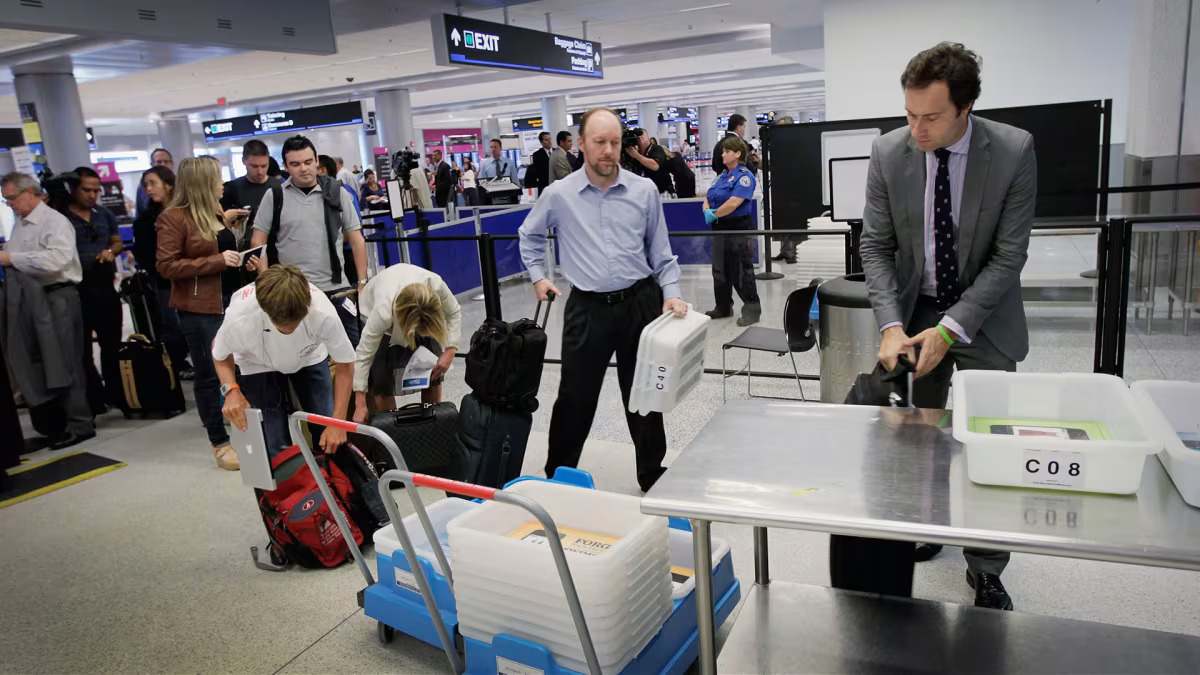
Navigating TSA security checkpoints remains one of the most stressful aspects of air travel, with long lines, inconsistent procedures, and the constant pressure of being scrutinized creating anxiety for even experienced travelers. While most passengers understand obvious behaviors to avoid at airport security, few realize that seemingly innocent actions like switching to a shorter queue can actually trigger heightened TSA scrutiny and potentially result in additional screening. Security experts and the U.S. Government Accountability Office confirm that TSA agents actively monitor for behavioral indicators of suspicious intent, and queue-hopping ranks among the red-flag behaviors that draw unwanted attention during the already tense airport security experience.
Understanding TSA suspicious behavior criteria helps travelers navigate security checkpoints more efficiently while avoiding actions that inadvertently signal potential threats to trained security personnel watching for anomalies in passenger conduct.
The Psychology Behind TSA Security Screening
Airport security TSA protocols extend far beyond physical screening equipment and prohibited items lists. TSA agents receive extensive training in behavioral detection techniques designed to identify individuals who may pose security risks based on conduct patterns rather than just physical items.
The TSA behavioral monitoring approach recognizes that individuals with malicious intent often exhibit specific psychological and behavioral markers. Nervousness, evasiveness, excessive fidgeting, and attempts to avoid certain screening procedures all register as potential warning signs that warrant closer examination.
Within this framework, queue-switching at TSA security becomes problematic because it demonstrates several concerning behaviors simultaneously. The physical act of moving between lines shows restlessness and indecision—traits associated with nervous individuals potentially concealing something. The effort to change positions suggests an attempt to manipulate circumstances, raising questions about underlying motivations.
TSA screening psychology research indicates that innocent travelers typically exhibit patience and compliance, accepting their assigned queue and proceeding through standard procedures without attempting to engineer alternative pathways. Deviation from this norm—even when motivated by simple impatience—creates behavioral anomalies that trained agents recognize as requiring investigation.
Why TSA Flags Queue-Hopping Behavior
The TSA queue-switching red flags stem from multiple security considerations that go beyond simple rule enforcement. Understanding these concerns helps explain why such seemingly minor actions trigger significant responses from security personnel.
First, moving between TSA security lines can appear as though travelers are attempting to avoid specific screening technologies. Different security lanes may utilize different equipment—some featuring full-body scanners while others employ only metal detectors. Passengers switching from a full-body scanner line to a metal detector queue raise immediate suspicions about what they might be attempting to conceal.
This equipment avoidance concern isn’t merely theoretical. Individuals attempting to smuggle prohibited items specifically seek out less advanced screening technologies that might not detect their concealed objects. When passengers exhibit behavior consistent with this avoidance strategy—even if motivated purely by impatience—TSA protocols require treating it as potentially suspicious.
Second, the physical logistics of queue-switching create attention-drawing scenarios. Travelers must collect their belongings, navigate crowded security areas, and reinsert themselves into new lines—a conspicuous process that naturally draws TSA agent attention. This visibility alone places the queue-hopper under closer observation than passengers who remain stationary.
Third, the apparent urgency demonstrated by switching lines for minimal time savings suggests either poor planning or deliberate evasiveness. Both scenarios interest security personnel: poor planning might indicate rushed preparation that overlooked prohibited items, while evasiveness obviously raises security concerns.
The U.S. Government Accountability Office TSA guidelines specifically identify erratic movement patterns and attempts to circumvent standard procedures as behavioral indicators warranting enhanced screening. Queue-hopping falls squarely within these parameters, regardless of the traveler’s innocent intentions.
Additional Screening Consequences of Queue-Switching
Beyond merely drawing attention, changing TSA security queues can result in tangible consequences that actually increase the time and scrutiny travelers face. Understanding these airport security screening consequences helps illustrate why the practice proves counterproductive even from a purely self-interested perspective.
TSA extra screening triggers include any behavior that suggests potential security risks. Once flagged for additional examination, travelers may face:
Enhanced pat-downs involving more thorough physical screening than standard procedures Secondary bag searches where every item receives individual inspection Explosive trace detection testing requiring swabbing and laboratory analysis Interview questions about travel purpose, itinerary, and behavior Documentation verification involving closer examination of identification and boarding passes
These TSA additional security checks can easily add 15-30 minutes to the screening process—far exceeding any time potentially saved by switching to a “faster” line. The irony is inescapable: the impatience that motivates queue-hopping creates delays far greater than simply accepting the original queue assignment.
Moreover, the enhanced screening experience increases stress levels and creates a more adversarial interaction with security personnel. What began as a simple attempt to save time transforms into an uncomfortable situation where travelers must explain their actions and submit to invasive procedures—precisely the scenario most people hope to avoid at security checkpoints.
The Illusion of Shorter Security Lines
Beyond the security implications, switching TSA lines often fails to deliver the anticipated time savings due to factors not immediately visible from external observation. Understanding these TSA queue length misconceptions helps travelers make better decisions about whether line-switching ever makes practical sense.
TSA security line speed depends on numerous variables beyond simple passenger count:
Passenger composition: Families with young children, elderly travelers requiring assistance, and inexperienced flyers all slow processing significantly. A line with fewer total passengers but higher proportions of these groups may actually move slower than longer lines of experienced business travelers.
Baggage complexity: Passengers with multiple carry-on items, strollers, car seats, and medical equipment require more time for screening. These items aren’t always visible from line entry points, making accurate speed assessment impossible.
Security equipment: Different lanes utilize different technology combinations, some faster than others. A shorter line with slower equipment may process passengers more slowly than a longer line with newer, faster scanners.
Staffing levels: Lanes with single TSA agents process travelers more slowly than those with multiple personnel handling different functions simultaneously. This staffing variation isn’t always apparent from external observation.
Random security selections: Some passengers receive random selection for enhanced screening regardless of behavior. When this occurs in your new queue, the time advantage evaporates instantly.
These hidden variables mean that apparent queue length provides poor predictive value for actual wait times. The “shorter” line that tempted you to switch may actually prove slower than your original position, creating frustration on top of the security concerns your movement generated.
Best Practices for Efficient TSA Security Processing
Rather than attempting to game the system through queue-switching, travelers achieve better results by following established airport security best practices that expedite legitimate screening while avoiding behavioral red flags.
Arrive early: The single most effective strategy for stress-free security is allowing ample time. TSA recommends arriving 2 hours before domestic flights and 3 hours before international travel. This buffer eliminates the urgency that motivates risky behaviors like queue-switching.
Prepare in advance: Review TSA prohibited items lists before packing. Organize carry-on bags for easy screening with electronics and liquids readily accessible. Wear shoes that slip on and off easily and minimize jewelry and accessories requiring removal.
Enroll in TSA PreCheck: This trusted traveler program provides access to expedited screening lanes where passengers keep shoes, belts, and light jackets on while leaving laptops and liquids in bags. The program costs $78 for five years—a modest investment for frequent travelers that eliminates most security stress.
Accept your assigned queue: Once in line, commit to that position rather than constantly evaluating alternatives. This acceptance reduces stress while avoiding the behavioral flags associated with movement and indecision.
Stay informed: Familiarize yourself with current TSA security procedures and regulations. Understanding what to expect reduces anxiety and helps you move through screening efficiently without drawing unwanted attention.
Maintain calm demeanor: Recognize that some wait is inevitable and approach security as a necessary precaution rather than personal inconvenience. This mindset shift reduces stress hormones that can manifest as suspicious nervousness.
Follow instructions precisely: Listen carefully to TSA agent directions and comply immediately. Questioning or hesitating before complying can appear evasive even when you simply didn’t hear or understand the instruction.
Understanding TSA Agent Perspective
Appreciating the TSA agent viewpoint helps explain why behaviors that seem innocent to passengers trigger security responses. TSA agents perspective on passenger behavior is shaped by extensive training in threat recognition and the grave responsibility of preventing dangerous items or individuals from boarding aircraft.
From their position, TSA personnel observe hundreds of passengers daily, developing pattern recognition that identifies anomalies. Experienced agents can often sense when something isn’t right even before identifying specific concerning behaviors—a skill developed through years of observation and training.
The high-stakes nature of aviation security means agents must investigate anything potentially suspicious rather than giving travelers the benefit of the doubt. Missing a genuine threat carries catastrophic consequences that far outweigh the inconvenience of additional screening for innocent passengers exhibiting red-flag behaviors.
This professional reality means that actions like queue-switching—however innocently motivated—receive serious attention because the cost of ignoring them is simply too high. Understanding this calculus helps travelers recognize that enhanced screening isn’t personal persecution but rather the predictable consequence of behavior that legitimately warrants investigation.
Stress Management for Airport Security
Given the inherent stress of TSA security checkpoints, developing effective coping strategies helps travelers navigate the experience more comfortably while avoiding anxiety-driven behaviors that draw unwanted attention.
Breathing techniques: Practice slow, deep breathing while waiting in line. This activates the parasympathetic nervous system, reducing stress hormones and promoting calm—both improving your experience and preventing nervous behaviors that concern TSA agents.
Realistic expectations: Accept that security takes time and occasional inefficiencies are inevitable in any large-scale operation. This acceptance reduces frustration when lines move slowly or procedures seem illogical.
Productive distraction: Use wait time for useful activities like reviewing travel documents, checking flight status, or listening to music. Keeping your mind occupied reduces fixation on queue length and temptation to switch lines.
Perspective maintenance: Remind yourself that security exists to protect all passengers. The minor inconvenience you experience contributes to the safety that allows modern air travel to remain remarkably secure despite enormous passenger volumes.
Long-Term Solutions: Improving Airport Security Experience
While individual behavioral adjustments help, systemic improvements to TSA security procedures could reduce overall stress and the temptation toward counterproductive behaviors like queue-switching.
Airport security technology advances including biometric screening, AI-powered threat detection, and advanced imaging systems promise faster, less invasive screening. As these technologies deploy more widely, wait times should decrease while maintaining or improving security effectiveness.
Enhanced TSA communication about expected wait times, lane speeds, and equipment configurations would help passengers make informed queue selections initially, reducing the perceived need for switching. Digital signage displaying real-time wait estimates could improve passenger experience while reducing movement within security areas.
Expanded trusted traveler programs making expedited screening accessible to more passengers would segment traffic more effectively, with experienced, pre-vetted travelers moving through dedicated fast lanes while others receive standard screening.
Understanding why behaviors like queue-switching trigger TSA scrutiny empowers travelers to navigate security checkpoints more successfully. By accepting assigned queues, arriving early, and approaching security with appropriate preparation and attitude, passengers can move through this necessary process efficiently while avoiding the complications that innocent but ill-advised actions can create.
For travelers seeking additional guidance on navigating airports smoothly, understanding security protocols, and making informed travel decisions, The Inspiring Insight offers expert perspectives and practical advice across all aspects of modern travel. Explore our comprehensive travel resources for insights that enhance every journey.